Questões de Concurso
Filtrar
38 Questões de concurso encontradas
Página 1 de 8
Questões por página:
Questões por página:
Concurso:
Câmara de Ipu - CE
Disciplina:
Inglês
Which option contains a sentence that is fully acceptable in standard English with regard to countable/uncountable nouns and quantifiers?
Read the comic strip:
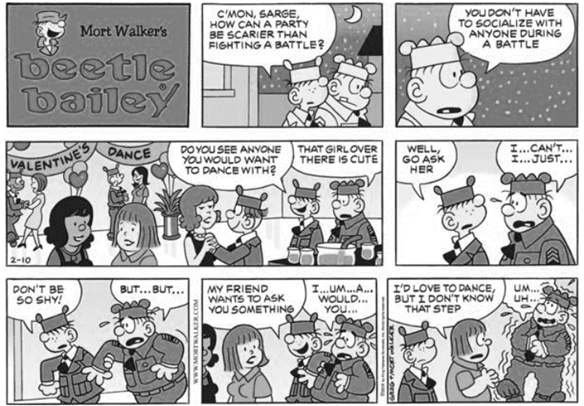
WALKER, M.; WALKER, G. Beetle Bailey. Disponível em: https://www.arcamax.com. Acesso em: 03 set. 2024.
The sentence “That girl over there is cute” shows an example of a feminine noun. Choose the option that correctly shows masculine and feminine equivalent nouns.
WALKER, M.; WALKER, G. Beetle Bailey. Disponível em: https://www.arcamax.com. Acesso em: 03 set. 2024.
The sentence “That girl over there is cute” shows an example of a feminine noun. Choose the option that correctly shows masculine and feminine equivalent nouns.
Concurso:
Prefeitura de Iporã do Oeste - SC
Disciplina:
Inglês
We often use two nouns together to show that one thing is a part of something else. Identify the
wrong noun modifier used.
Concurso:
Prefeitura de Iporã do Oeste - SC
Disciplina:
Inglês
Read the paragraph below.
The distinction between countable and uncountable is based on the reality of what the nouns describe, the distinction is ____. Some learners of English are surprised to discover that, for example, the following are uncountable: bread, hair, accommodation. (Parrott, Matin. Grammar for English language teachers. 20004)
Choose the best option that completes the context.
Concurso:
Prefeitura de Cuiabá - MT
Disciplina:
Inglês
mostrar texto associado
Afixos (sufixos e prefixos) são elementos que
modificam as palavras e atribuem a elas determinadas
classes morfológicas. O sufixo -ly, em “nearly” e
“consistently”, atribui a esses termos a classe de:
